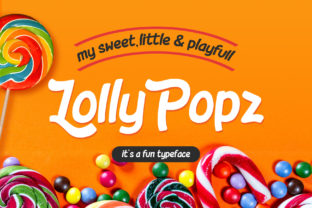
Lolly Pop: A Sweet Font for Creating Standout Handmade Products
If you’re a crafter or small shop owner, you know that the right typography can transform a simple project into something special. It’s the secret ingredient that gives your labels charm, your invitations personality, and your products that irresistible handmade appeal. In my own work—from printable art to product packaging—I’ve found that a font’s character can make or break a design. That’s why discovering a display font like Lolly Pop felt like unlocking a new level of creative potential.
The Friendly Personality of Lolly Pop
Lolly Pop is exactly what its name suggests: sweet, joyful, and full of character. As a display font, its primary job is to capture attention and convey mood, not to handle paragraphs of text. Its smooth, flowing curves create a sense of movement and playfulness, while the included friendly swashes offer those little decorative flourishes that make a design feel polished and unique. This isn’t a harsh or stark modern typography; it’s warm and approachable. The overall style sits comfortably in a space between a classic script font and a more structured handwritten font, making it incredibly versatile for craft-based projects where you want to inject happiness and charm.
Practical Projects Where Lolly Pop Shines
The real test of any creative font is how it performs in actual projects. For makers, Lolly Pop excels in applications where readability and aesthetic appeal need to balance perfectly.
Labels, Tags, and Packaging
Think about your product labels for candles, honey jars, or handmade soaps. Using Lolly Pop for the product name or a short, evocative phrase like “Fresh Lavender” instantly elevates the perceived quality. Its smooth curves translate beautifully onto sticker paper or vinyl for cutting machines like Cricut or Silhouette, ensuring clean cuts even for smaller tag sizes. For a boutique’s hang tags or packaging stickers, this font communicates care and craftsmanship directly to your customer.
Invitations, Cards, and Stationery
For wedding invitations, birthday cards, or seasonal greeting cards, Lolly Pop brings a celebratory tone. Using it for the main headline—like “You’re Invited!” or the names on a wedding welcome sign—adds a layer of personal, joyful decoration. It pairs wonderfully with simpler fonts for the informational details, creating a hierarchy that is both beautiful and functional. The swashes are particularly effective here for adding a touch of elegance without feeling overly formal.
Home Decor and Wall Art
In the world of digital printables and physical wall art, typography is often the entire design. Lolly Pop is perfect for creating printable quotes, family name signs, or seasonal art (think “Gather Here” for a farmhouse-style kitchen). Its readability at larger sizes ensures it looks striking on a canvas or framed print, and the friendly curves make it ideal for designs intended to uplift and inspire.
Merchandise and Apparel
When designing for mugs, tote bags, or t-shirts, you need a font that is both expressive and structurally sound for the transfer or printing process. Lolly Pop’s well-defined shapes work well as SVG-style designs for cutting machines, making it a reliable choice for turning a sweet phrase or a business logo into wearable or usable merchandise.
Crafting Readability and Commercial Appeal
A beautiful font must also be a practical one. For crafters, readability is paramount, especially on smaller items like jar labels or business cards. Lolly Pop is designed for display use, meaning it’s best for titles, names, and short phrases rather than lengthy blocks of text. This is perfect for our needs—most product labels and decorative pieces rely on concise, powerful wording. Before committing to a final design, always preview your mockup at the actual size it will be printed or cut. The smooth curves of Lolly Pop hold their integrity well, but this practice ensures your message is clear and attractive.
From a commercial standpoint, the emotional appeal of your typography directly influences customer perception. A consistent, charming font like Lolly Pop can become a cornerstone of your brand identity, making your products instantly recognizable. It whispers “handmade with love” before a customer even reads the full description.
Pairing Lolly Pop with Other Fonts
While Lolly Pop is stunning on its own, its true power is unlocked through thoughtful font pairing. For a balanced design, pair it with a clean, neutral sans serif font for all your supporting text—like details, prices, or instructions. This combination allows Lolly Pop’s personality to shine as the focal point while ensuring all information remains perfectly legible. For a more classic or rustic feel, try pairing it with a simple serif font. This approach is excellent for wedding stationery suites or artisan product lines where you want a blend of decorative charm and traditional structure.
A Maker’s Checklist for Using a New Font
Whenever I integrate a new font like Lolly Pop into my toolkit, I run through a quick practical checklist:
- Explore the Character Set: Open the font file and test the swashes and alternates. These special characters are often where the magic hides, allowing you to customize words for a truly unique look.
- Check File Formats: Ensure you have the file formats you need for your software and machines (like OTF, TTF, or potentially SVG paths for cutting machines).
- Consider Multilingual Support: If you sell products internationally or use words in other languages, verify the font supports the necessary characters.
- Understand the License: This is crucial. Most premium fonts like Lolly Pop come with a commercial license, but always read it. Confirm it covers your specific use—selling physical products, creating digital printables for sale, using it in client work, or applying it to merchandise. This protects your business and respects the designer’s work.
Incorporating Lolly Pop into your designs isn’t just about adding a new typeface; it’s about infusing your creative work with a specific kind of joy. Its sweet curves and happy demeanor solve a practical problem for makers: how to make something not only look professional but also feel genuinely welcoming. From the moment you type out your first product name with it, you’ll see how a font can do more than just spell a word—it can tell a story, set a mood, and ultimately, help your handmade creations connect with the hearts of your customers.